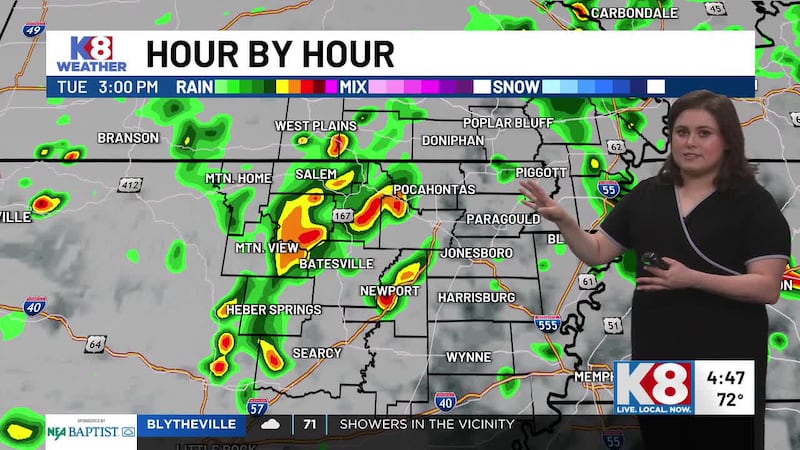
Arkansas Weather Stats of 2025
A look back at data from 2025 in Northeast Arkansas
JONESBORO, Ark. (KAIT) - 2025 will be remembered in Northeast Arkansas as a year of extremes: a soaking spring that produced historic severe weather followed by a summer and fall that baked the region into drought.
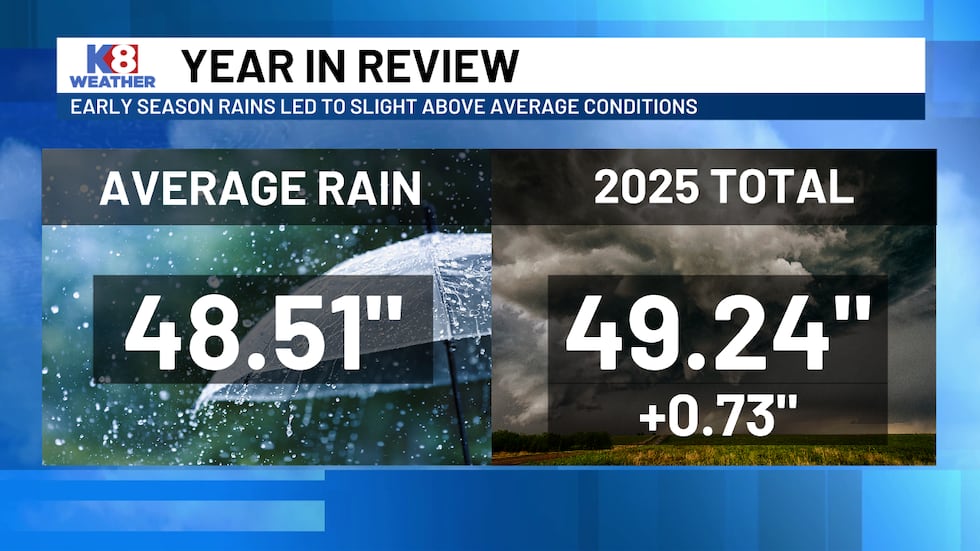
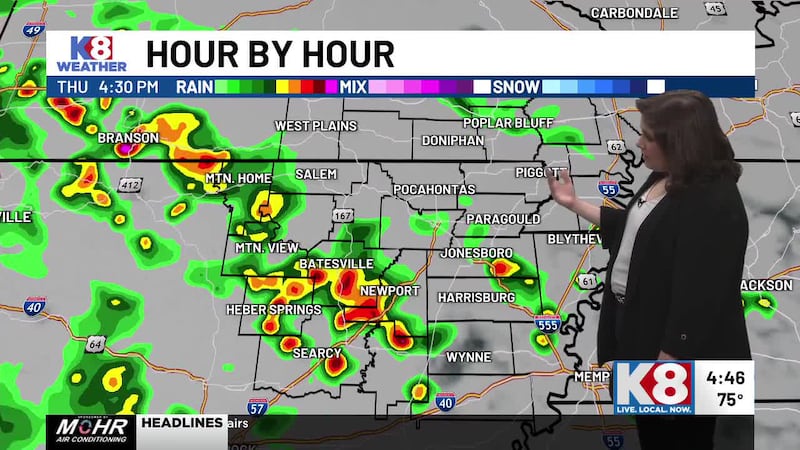
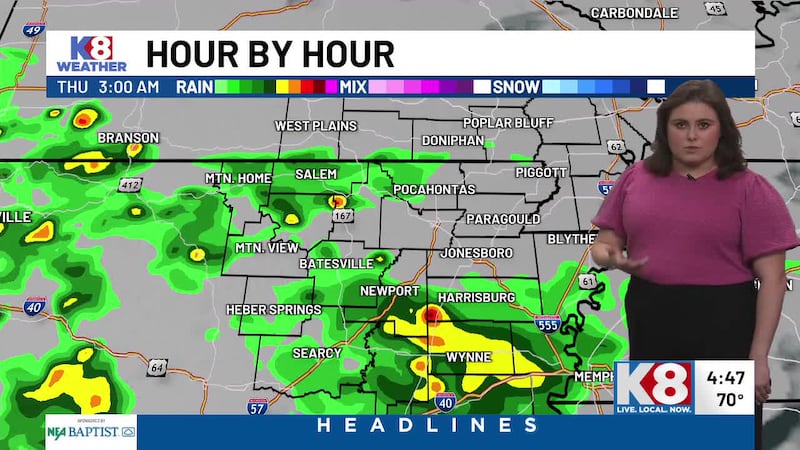
A typical calendar year brings about 48.5 inches of rain. In 2025, the region recorded just over 49 inches, but the distribution was highly uneven. From January through June, the area received nearly 38 inches of rainfall. From June through December, it recorded only 11.38 inches.
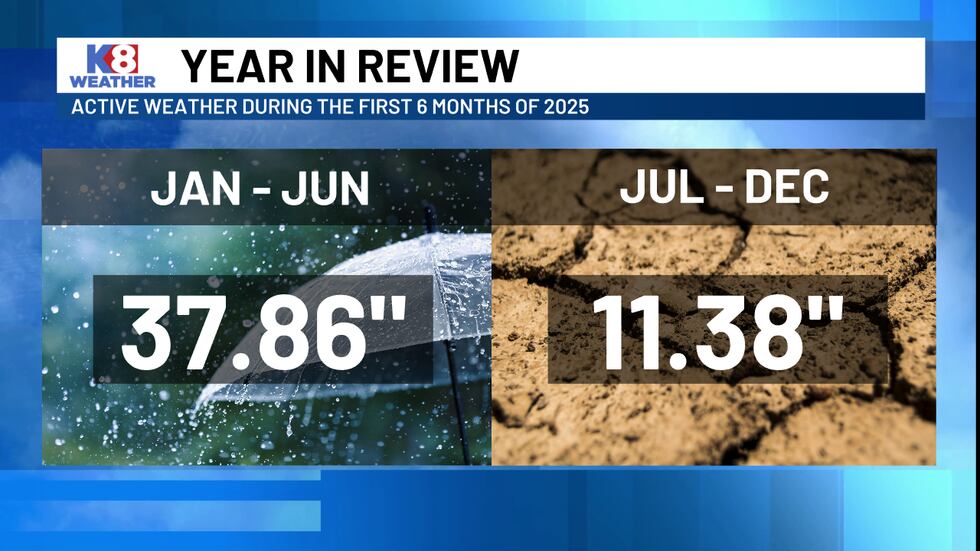
That early-season deluge set the stage for a busy and damaging severe weather season.
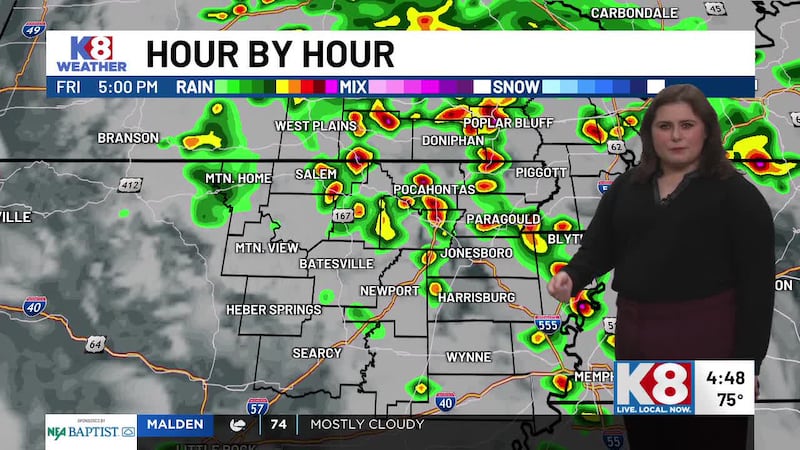
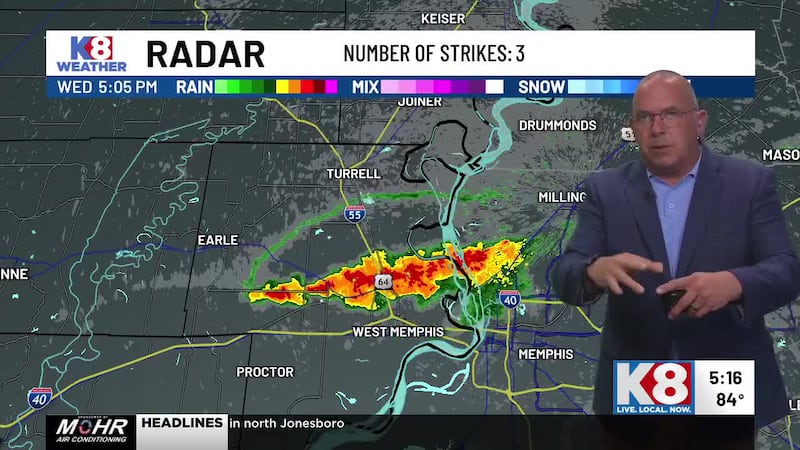
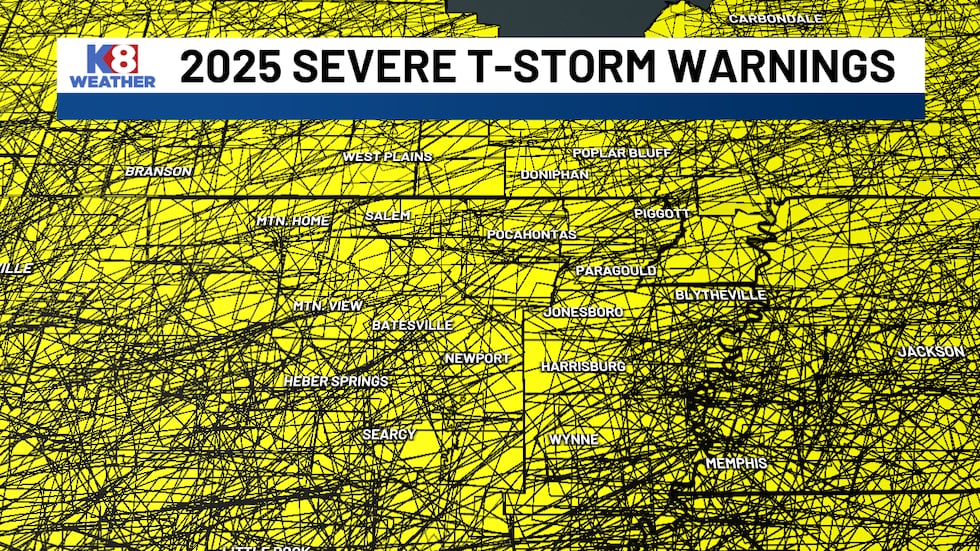
Tornadoes played a major story in March and April. Two of the most significant outbreaks hit the region on March 14 and April 2, sending tornado warnings across northeastern Arkansas and surrounding states. Large hail and damaging straight-line winds were widespread; many communities saw multiple severe thunderstorm warnings in a single day.
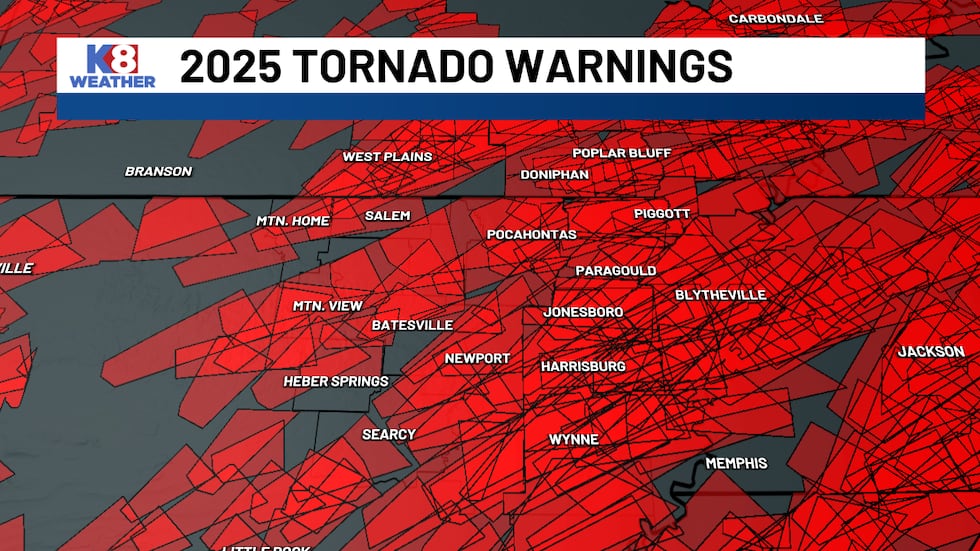
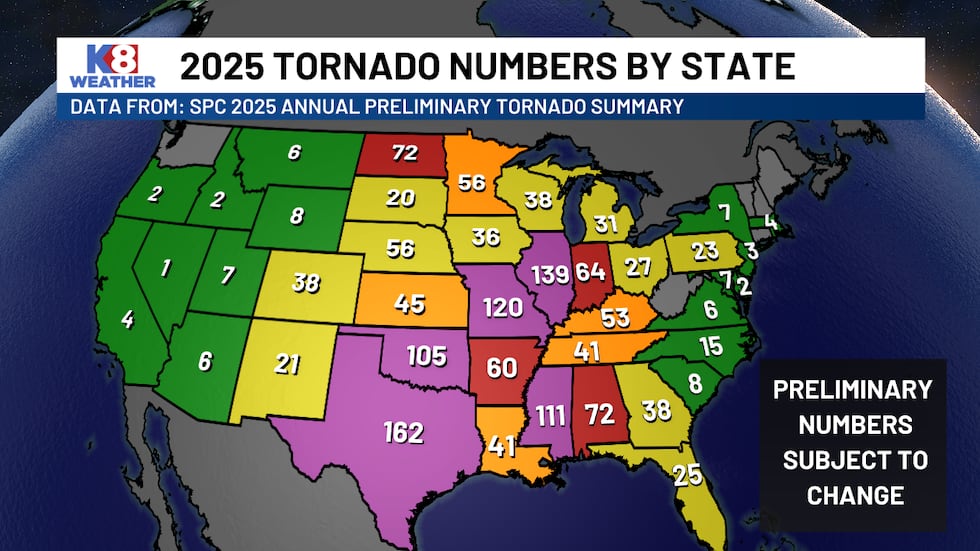
Data from the national weather service in Little Rock confirms the Natural State experienced 60 tornadoes in 2025, well above the long-term average.
Across the rest of the United States, many tornadoes were reported with final numbers subject to change as damage surveys are finalized.
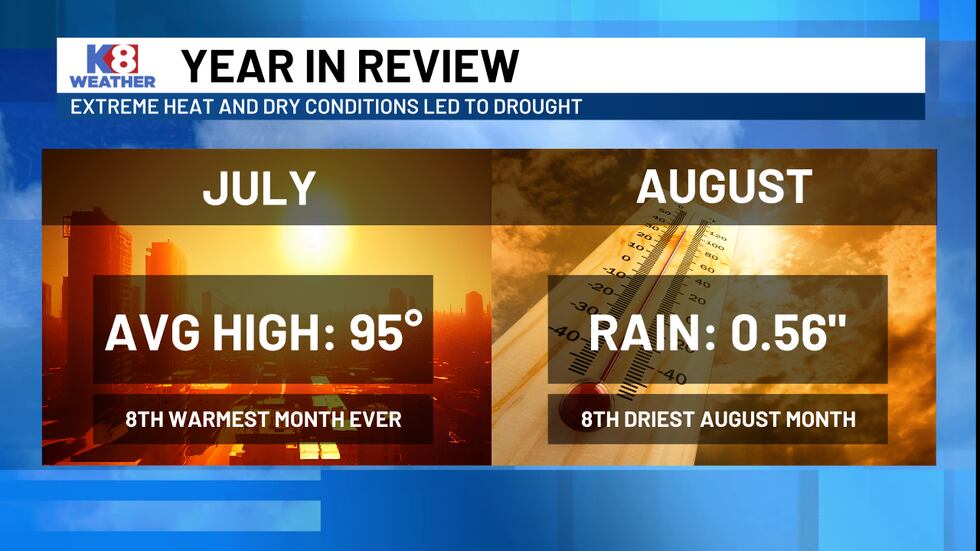
The pattern flipped sharply in summer. July averaged a high of 95 degrees, making it the eighth-warmest July on record for the area. Dry conditions intensified in August, which saw only about 0.5 inch of rain and ranked among the driest Augusts on record.
From late summer into fall, many locations received only 5% to 25% of expected rainfall for a 30-day period.
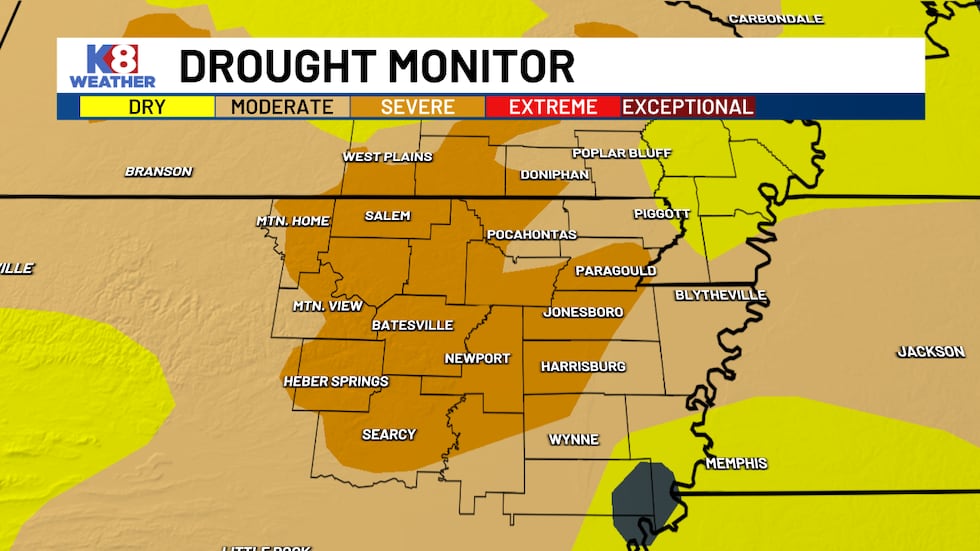
The lack of late-season rain left much of the region in drought by the end of the year. The latest U.S. Drought Monitor showed growing areas of moderate to severe drought across northeastern Arkansas heading into winter.
Residents continue to say the combination of early flooding rains, widespread severe weather and a stubborn summer drought made 2025 one of the most disruptive years in recent memory for the region.
As 2026 opens, many hope for a more balanced pattern with steadier, more evenly distributed precipitation and fewer extreme events.
The latest forecasts can always be found in the K8 weather app or online on the K8 24/7 weather livestream.
To report a typo or correction, please click here.
Copyright 2026 KAIT. All rights reserved.